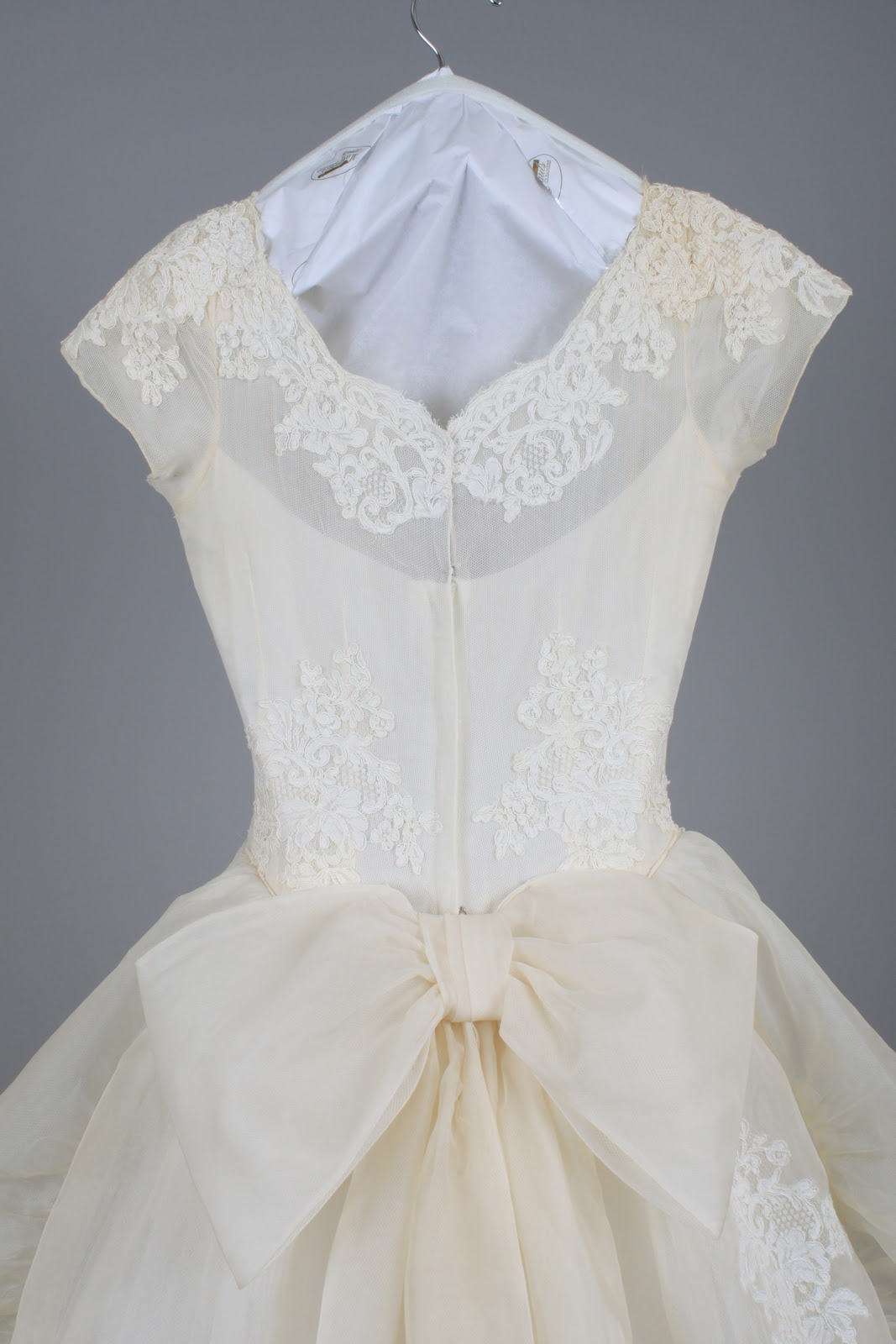
Tuesday, February 14, 2012

Wedding Gown Preservation


You said "I do," you're wearing the ring, and now you're back at home, putting away all of your wonderful gifts and rejoicing in your happy day.

But what should you do with your dress? The best case scenario is that you included preservation into your wedding budget. Properly cleaning and preserving your gown will keep it beautiful for a lifetime.

TIP: Include wedding gown preservation on your registry list so guests can give this important wedding step to you as a gift.

What sets Margaret's Legacy Gown Preservation apart from the rest?
Margaret's takes great care when handling, cleaning, and preserving your gown.
  • We thoroughly inspect your gown for stains, wear, age, and oxidation, and then we test inconspicuous beads and trims for cleaning ability.
  • We then carefully pre-treat and hand-wash the gown. We rinse the gown in virgin solvent. Our proprietary anti-sugar treatment prevents latent oxidized stains.
  • We thoroughly inspect your gown and follow up with post-stain removal, if necessary.
  • After post-stain removal, we hand-finish the gown, taking extreme care to maintain the gown's lines, drape, and fabric hand.
  • We then tighten and fix beads and trim.
  • You can make an appointment to inspect your gown before preservation, if desired.
  • We carefully package your gown in an archival-quality box, using acid-free tissue and a cotton muslin liner.
  • Your gown preservation service comes with a lifetime warranty against caramelized sugar stains and yellowing of the gown. Our written international guarantee is backed by the Association of Wedding Gown Specialists. Return your gown to any participating Wedding Gown Specialist to have your gown inspected and pressed at no charge.
  • The Association of Wedding Gown Specialists is partners with Carbonfund.org. This partnership presents a higher standard for gown preservation. Carbon emissions generated at each stage of the preservation process will be offset with donations to Carbonfund.org. Donations fund reforestation projects worldwide.
Preservation box at Margaret's
I'm going to have my gown preserved elsewhere. Is there anything I should look out for?
Make sure to interview your prospective preserver.
  • Look out for any box that has plastic: plastic viewing window, plastic bags, or a plastic box. Plastic is chemically unstable and promotes the formation of mold and mildew. Plastic can also cause your gown to yellow over time.
  • Never allow your gown to be packaged in a standard cardboard wedding gown box, as it might contain acid that could damage your gown. Insist on archival-quality materials only.
  • Make sure that your preservationist uses white, acid-free tissue.
  • The claim of "air tight" or "vacuum sealed" is a  myth. You can't vacuum-seal a cardboard box. Air-tight isn't the best way to store fabric over an extended period of time. A sealed box restricts air flow. All fabric, even synthetic, requires adequate air circulation.
  • Be wary if you're told that opening the box will void the warranty. After storing, your gown should be inspected and aired out periodically.
How should I store my preserved gown?
  • Store your gown in a cool, dry, dark area of your house. Avoid areas that hold a lot of excessive moisture and heat, such as the basement or attic. 
  • Inspect your gown every two to three years and refold it to prevent permanent creases, keeping handling to a minimum. Because skin oils can damage the preservation, we include white cotton gloves for you to use while handling your gown. And, as tempting as it is, never try on the gown.
WIN! Enter for a chance to win a FREE wedding gown preservation service. The next drawing is on April 30, 2012!

Monday, January 30, 2012

Margaret's Presses Wedding Gowns for Photo Shoot

The Margaret's Cleaners bridal department pressed and prepared 32 graceful, beautiful gowns for appearance in the December 2011/January 2012 issue of Exquisite Weddings by San Diego Magazine.

The gown labels included Alvina Valenta, Nicole Miller, Jenny Packham, Martina Liana, Pronovias, and more.

Staff from Margaret's worked on-site with the editors, photographers, and models. It was a very exciting experience, and we're happy that the Exquisite Weddings staff trusted us to handle these fashionable gowns for this important photo shoot.
 
Check out more of these beautiful wedding gowns here or click here to purchase the issue.

(Photos by Jeff and Erin Youngren)


Thursday, January 19, 2012

Follow a 50-year-old wedding gown through the restoration process

Ever wonder what happens to a wedding dress when it comes to Margaret's? Follow this 50-year-old wedding gown through the entire restoration process.

Before
After


The yellowing and stains on the shoulders and bodice could be from a number of things: hairspray, perfume, perspiration, and even food that caramelized over time. 


______________________________________________________________________________________________


__________________________________________________________________________________

__________________________________________________________________________________

__________________________________________________________________________________

Restoration (Spa Day!)

Now that you've seen the incredible before-and-after photos, take a look at what goes into gown restoration. Every dress is treated differently on a case-by-case basis, but this photo tour will help you understand some of the processes at Margaret's.

You can think of the restoration process as a sort of spa-day for wedding gowns! Our professionals treat gowns with utmost care and use tried-and-true techniques that are decades in the making.

Steps for a gown "Spa Day":


Draw a warm, spa-like bath for the gown, and then add a special cleaning solution.

You won't find soaking tubs like these at any other couture dry cleaner.


Carefully submerge the dress into the warm water.


Relax and soak.

Ahhh...


Remove the dress. Look at that water!


Fill the spa, add a different special solution, and then place the gown back into the tub for more relaxing.


Soak, soak, soak!


Rinse gently to clean away the impurities.


Carefully gather the dress for a gentle spin cycle.


A quick spin!


Our specialty seamstress restitches metal hooks and clasps (the equivalent of a spa massage?).


More pampering...


Looking refreshed and beautiful!


Transformation
Before
After


Tell us: What do you think of this restoration? Do you have a vintage gown you'd love to restore? Or do you hope that one day your daughter or daughter-in-law will wear your wedding dress? Talk to us in the comments section below!

Wednesday, November 17, 2010

Gown Preservation

The preservation method preferred by museum conservators is the Museum Box Storage Method used at Margaret’s Cleaners. All materials used in this preservation process are not only acid-free but also of true archival-quality. This means the chest and tissue are also lignin-free, which prevents them from turning acidic and yellowing the gown. For additional protection, an unbleached muslin fabric liner is used as well. An outer muslin bag adds extra protection and keeps the box dust-free during storage. With white gloves and care, the box can be periodically opened, the gown inspected and refolded without voiding the warranty.

In selecting a reputable preservation specialist to preserve your gown, look for one with a great deal of experience. Your gown specialist should have been performing preservation as a major emphasis for a number of years. Also, the entire process should be performed directly by them, and not by a third party that you will never meet. Their in-house processing capabilities should include hand cleaning as well as immersion techniques. Never trust your gown to a cleaner who sends it out to a wholesaler for preservation. Another important thing to ask is if finished gowns are rinsed in a virgin solution to flush any cleaning agents that remain after hand cleaning. Also be sure to ask if they provide an anti-sugar treatment. An international/lifetime warranty should be offered at no extra cost.
When should you have your gown cleaned and preserved? It is best to bring it in (or have it picked up) within a week or two after your wedding, before any stains have set! Many stains, invisible at the time, cause problems later. If you have a gown that was not preserved (or incorrectly preserved) and has yellowed, restoration is often possible. Many experienced preservationists are also certified in restoration techniques